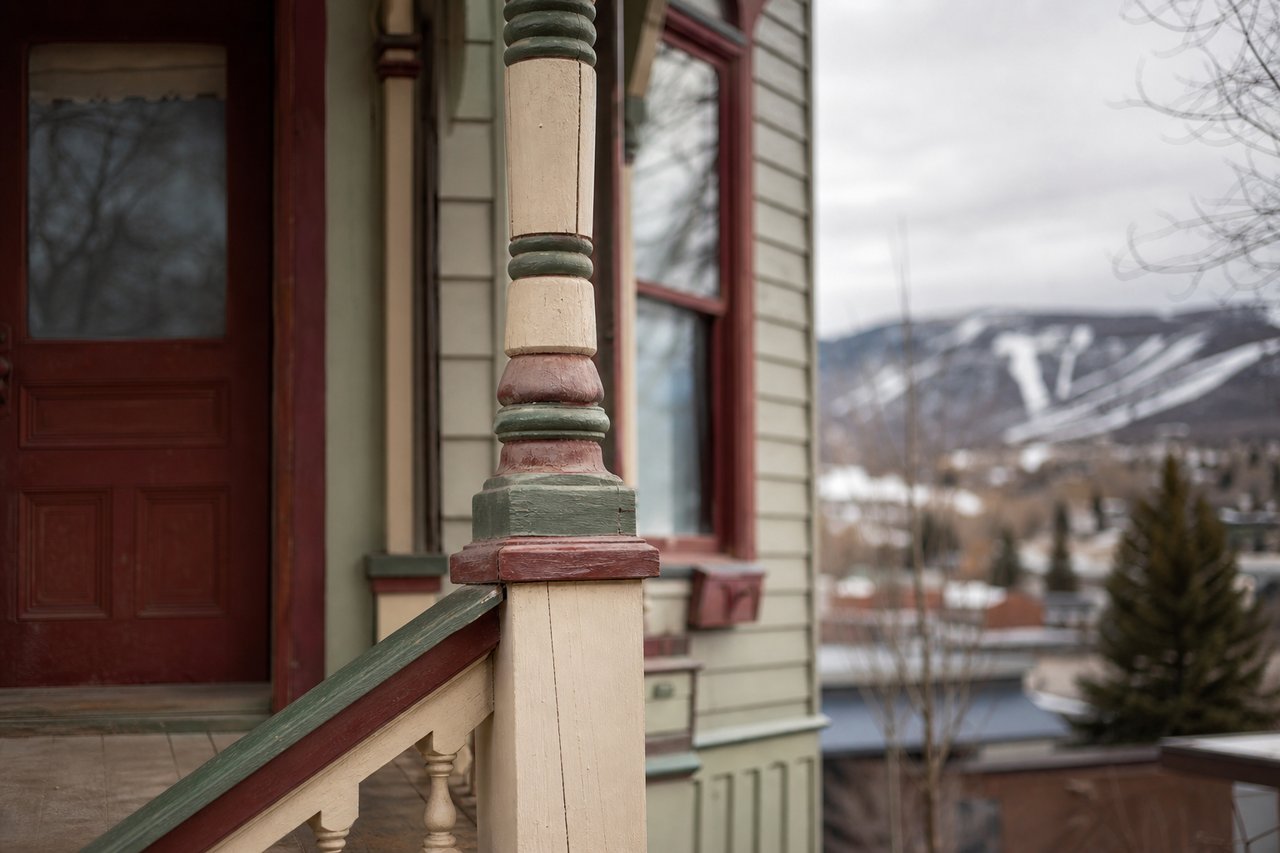
Buying a historic home in Routt County means navigating the City of Steamboat Springs' preservation review process, the Secretary of the Interior's Standards for Rehabilitation, and potential Colorado state tax credits, before assuming any renovation is straightforward. Designation status, exterior-change approvals, and older-building conditions all shape the real cost and timeline.
Historic Homes in Routt County: What Buyers Should Know
What should buyers know before purchasing a historic home in Routt County?
Buying a historic home in Routt County, particularly in Old Town Steamboat Springs, means the property may be subject to city preservation review, the Secretary of the Interior's Standards for Rehabilitation, and specific approval requirements for exterior changes. Designation status, the scope of proposed work, and older-building conditions all affect your renovation timeline and budget in ways that a standard purchase won't. The first step is always to verify the property's exact status with the city's Historic Preservation Planner before making any renovation assumptions.
Key Takeaways
- The City of Steamboat Springs has conducted nearly 500 architectural and historical inventories in Old Town Steamboat Springs, a home may be an eligible resource even without formal landmark designation.
- Properties on the Steamboat Springs Register of Historic Places must follow the city's Historic Design Guidelines and the Secretary of the Interior's Standards for Rehabilitation, which can restrict exterior alterations, window replacements, siding, roofing, and additions.
- Colorado's state historic-preservation tax credit program offers 20% to 35% credits for qualified owner-occupied residential rehabilitation, capped at $50,000, but eligibility must be confirmed with History Colorado before you count on it.
- The federal 20% historic rehabilitation tax credit does not apply to owner-occupied residences, it is reserved for income-producing or business-use properties.
- According to the Colorado Association of REALTORS® September 2026 report, single-family days on market in Steamboat Springs rose from 43 in August 2025 to 101 in August 2026, giving buyers more time to do thorough due diligence on complex properties like these.
How does historic designation actually work in Steamboat Springs?
Historic status in Steamboat Springs isn't binary. A property can fall into a few different categories, and each one carries different obligations, so the first thing I tell any buyer interested in an older Old Town property is: don't assume, verify.
Eligible resource vs. locally designated landmark: what's the difference?
An eligible historic resource is a property that the city has identified as having historical, architectural, or geographic significance, but hasn't yet been formally designated. It may be on the cultural-resource inventory without being on the register. A locally designated landmark has gone through the full designation process and is listed on the Steamboat Springs Register of Historic Places. Properties on that register, including homes like the Crowell-Marshall House, Carver House, Bourguin House, Remington House, Werner House, and others, are required to follow the city's Historic Design Guidelines and the Secretary of the Interior's Standards for Rehabilitation.
The distinction matters enormously for renovation planning. An eligible resource may be subject to review if you propose demolition or certain alterations, even without full designation. A designated landmark triggers a more defined review path. The city's January 2026 manager report notes that preservation reviews can be handled administratively or by the Historic Preservation Commission depending on the property and the proposed work, so the path isn't the same for every project.
As of January 12, 2026, the city added two new designations: the Parkinson-Propst-Casey's Pond Cabin as a historic resource and the Groesbeck-Marshall House as a local landmark. The inventory is active and growing, which means a property that wasn't on anyone's radar a few years ago could be in a different position today.
Your first call before you make renovation plans
Contact the city's Historic Preservation Planner and ask specifically for the property's architectural inventory form, its register status, the designation boundary, and the applicable review path. The city directs owners there for exactly this reason. Don't rely on the home's age or appearance alone, historic status and review obligations can vary by parcel, even within the same block on Oak Street, Aspen Street, Spruce Street, or Lincoln Avenue.
This is the kind of due-diligence step I walk my clients through before we even talk renovation budgets. The answer from the planner shapes everything that comes next.
What does renovation actually look like on a historic Routt County home?
Renovation on a designated historic property in Steamboat Springs isn't a hard stop, but it does require a different kind of planning than a standard remodel. Here's how I help buyers think through it.
What work triggers preservation review?
The city's review process focuses primarily on changes that affect the historic character of the exterior. Work that commonly triggers review includes:
- Facade changes, window and door replacements, and porch alterations
- Roof form changes and replacement materials (shingles, metal, original-profile matching)
- Siding replacement or new exterior cladding
- Additions to the structure, including rear or side additions
- Demolition of any part of a designated structure
Many interior alterations fall outside the review scope, but don't assume interior work is automatically exempt. The city's process depends on whether the work is inside or outside a designation boundary and whether the property is listed. When in doubt, ask the planner first.
Practical inspection priorities for older mountain properties
Beyond the preservation layer, older homes in Routt County carry a distinct set of physical inspection priorities that have nothing to do with historic status. I always encourage buyers to think about these before making an offer:
- Foundation and drainage: Freeze-thaw cycles in the Yampa Valley are relentless. Grading, drainage, and foundation condition deserve serious attention.
- Roof structure and ice-dam risk: Original roof forms may be historically significant but also undersized for today's snow loads. Ice-dam vulnerability is a real concern in Routt County winters.
- Moisture and insulation: Older wall assemblies weren't built for modern energy performance. Moisture infiltration behind original siding or around original windows is common.
- Electrical capacity and plumbing materials: Knob-and-tube wiring, galvanized supply lines, and aging sewer connections are all realistic findings in pre-1960 homes.
- Heating systems: Redundancy matters at altitude. Original heating infrastructure may be undersized or at end of life.
- Lead paint: For homes built before 1978, any renovation that disturbs painted surfaces, original trim, windows, doors, siding, porches, generally requires an EPA-certified firm following lead-safe work practices under the Renovation, Repair and Painting Rule. Confirm your contractor's certification before work begins.
- Wildfire exposure: Depending on location, site-specific wildfire exposure considerations are worth including in your inspection scope.
None of these are automatic deal-killers. But they're the questions a thorough inspector and a good contractor should be answering before you commit to a renovation budget. Every property is different, and a general cost estimate from the internet is worth very little on a 100-year-old mountain house.
The market context heading into fall 2026
The broader Steamboat Springs single-family market has shifted meaningfully. According to the Colorado Association of REALTORS® August 2026 report, July 2026 saw 15 closed single-family transactions in Steamboat Springs/Routt County, a median sale price of $1.619 million, and approximately nine months of supply with an average of 72 days on market. The September 15, 2026 report noted that single-family days on market rose from 43 in August 2025 to 101 in August 2026, a significant shift toward buyer choice.
These are broad market figures, not historic-home-specific data. But the direction matters: more time on market means more time for buyers to do the kind of thorough due diligence that a historic property genuinely requires. If you're considering a second home in Steamboat, the Buying a Second Home in Steamboat guide covers the broader purchase process in this market.
Market Metric | July 2026 (Steamboat Springs / Routt County Single-Family) |
|---|---|
Closed Transactions | 15 |
Median Sale Price | $1.619 million |
Average Sale Price | $2.205 million |
Active Inventory | 121 homes |
Months of Supply | ~9 months |
Average Days on Market | 72 |
Source: Colorado Association of REALTORS®, August 2026. Broad market figures, not historic-home-specific.
Are there tax incentives for renovating a historic home in Colorado?
Yes, but the federal and state programs work very differently, and the distinction matters before you treat either one as part of your renovation budget.
Colorado's state historic-preservation tax credit
Colorado's program, administered through History Colorado, can apply to qualified owner-occupied residential rehabilitation projects. The credit ranges from 20% to 35% of qualified rehabilitation expenses, with owner-occupied residential credits capped at $50,000. The program was scheduled to remain in effect through December 31, 2029 per the cited program materials, but eligibility, application requirements, qualified expenses, and certification requirements must be confirmed directly with History Colorado and the relevant state agency before you assign any dollar value to the incentive. Not every renovation qualifies, and the application process has its own timeline.
The federal credit doesn't apply to your primary or secondary residence
The federal 20% historic rehabilitation tax credit is limited to certified historic structures used for business or other income-producing purposes, including qualifying rental residential use. It does not apply to an owner-occupied private residence. If you're planning to use the property as a full-time home or a non-renting vacation property, the federal credit is off the table. If you're considering income-producing rental use, that's a different conversation, and one worth having with a tax advisor who knows the program requirements.
Your specific situation depends on the property's designation status, the scope of work, the timing of your applications, and whether the rehabilitation meets the Secretary of the Interior's Standards. This is exactly the kind of question I help clients map out before they commit to a purchase price.
Frequently Asked Questions
How do I find out whether a historic home in Steamboat Springs is officially designated?
Contact the city's Historic Preservation Planner directly and ask for the property's architectural inventory form, register status, and designation boundary, this is the step the city specifically directs owners to take. A property can appear on the cultural-resource inventory without being on the register, and obligations differ between the two. Don't rely on age or appearance alone; status can vary by parcel even within the same block.
Does buying a historic house in Old Town Steamboat Springs restrict renovations?
If the property is on the Steamboat Springs Register of Historic Places, exterior changes must follow the city's Historic Design Guidelines and the Secretary of the Interior's Standards for Rehabilitation. That means proposed alterations to windows, siding, roofing, porches, doors, and additions require review and approval. Many interior alterations are outside the review scope, but the specifics depend on the property's designation and the nature of the work.
Do I need city historic-preservation approval to replace windows, siding, or a roof on a designated property?
Generally, yes, exterior work on a locally designated landmark typically requires review, and the city's process can be handled administratively or by the Historic Preservation Commission depending on the property and proposed scope. Window replacements in particular are a common point of review because original window profiles are considered character-defining features. Contact the Historic Preservation Planner before assuming any exterior replacement is a simple permit.
Are Colorado historic-preservation tax credits available for an owner-occupied home?
Colorado's state program can apply to qualified owner-occupied residential rehabilitation projects, with credits ranging from 20% to 35% of qualified expenses and an owner-occupied cap of $50,000, per History Colorado materials. Eligibility depends on the property's status, the scope of work, and whether the rehabilitation meets program standards, confirm the details with History Colorado before treating the credit as a line item in your renovation budget. The federal 20% credit does not apply to owner-occupied residences.
What should I inspect before buying an older home in Routt County?
Prioritize foundation condition and drainage, roof structure and ice-dam vulnerability, moisture behind original siding and around windows, electrical capacity, plumbing materials, heating systems, and sewer connections. For pre-1978 homes, confirm whether any renovation scope will disturb painted surfaces and whether your contractor is EPA-certified for lead-safe work practices. A general inspection is a starting point, for an older mountain property, specialty inspections (structural, sewer scope, HVAC) often surface issues a standard inspection won't catch.
The bottom line on historic homes in Routt County
A well-preserved historic home in Old Town Steamboat Springs is a genuinely compelling property, but the due-diligence layer is thicker than on a standard purchase, and the renovation assumptions you make before verifying designation status can cost you real time and money. I work with buyers on exactly this kind of complex acquisition, from the first call to the Historic Preservation Planner through closing and into the renovation planning phase.
If you're looking at an older property in Steamboat Springs and want to understand what you're actually buying, schedule a consultation and let's walk through it together.
Equal Housing Opportunity. Cole Helberg, Colorado License #FA.100079634, Real Broker. Member: NAR, CAR, Altitude Association of Realtors. This article is general information only, not legal, tax, or financial advice. Confirm your specific numbers, tax-credit eligibility, and renovation requirements with your closing agent, tax advisor, lender, and the City of Steamboat Springs Historic Preservation Planner.