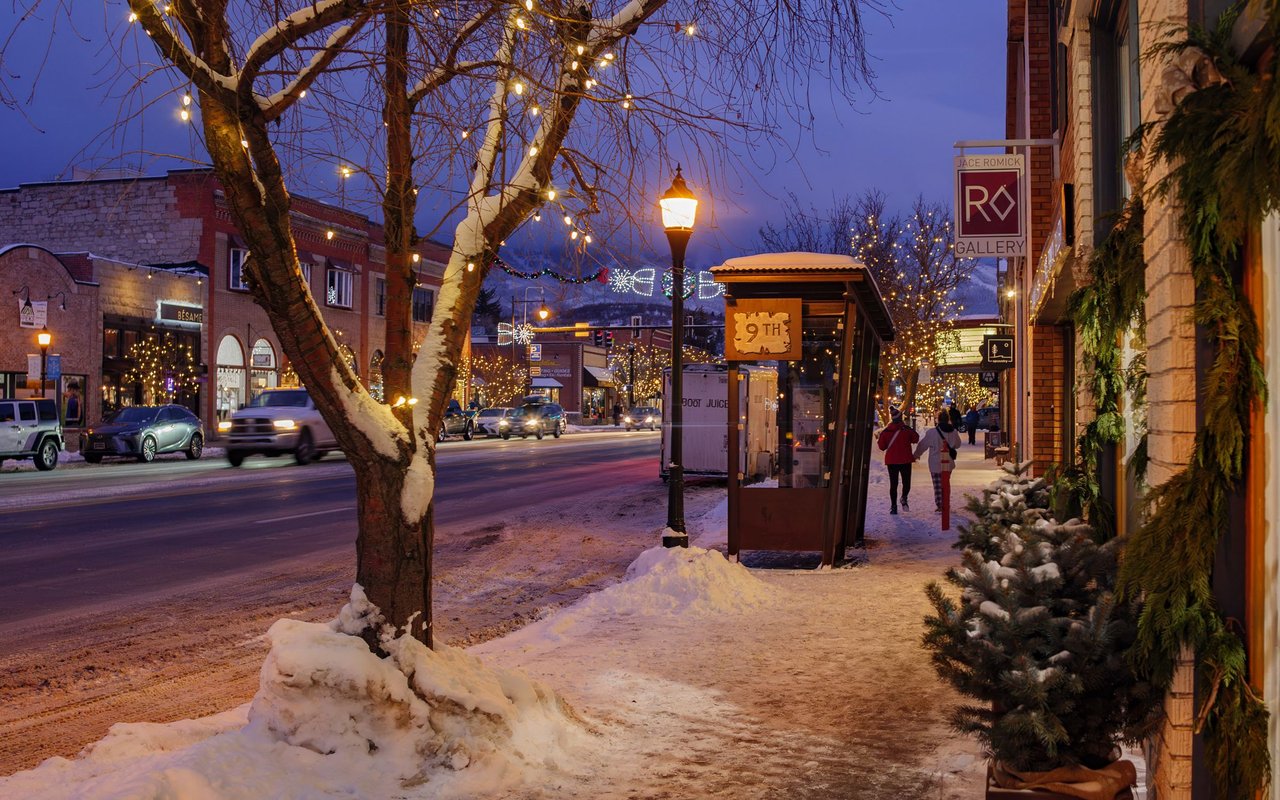
Second-home buyers are a huge part of the Steamboat market. By my count, somewhere between 40-50% of all transactions in the resort area and luxury neighborhoods are second homes — people from the Front Range, Texas, California, the Midwest, sometimes the East Coast, who want a piece of the mountain to come back to multiple times a year.
If you're considering a second home in Steamboat in 2026, here's what you actually need to know — financial reality, the right neighborhoods, the right property types, and the mistakes second-home buyers make most often.
Who's Actually Buying Second Homes Right Now
The 2026 second-home buyer profile in Steamboat looks like this:
- Family of 4-6, kids 8-18. Multiple weekends a year, longer holiday stays, kids learning to ski.
- Empty-nesters or pre-retirement. Buying now to use immediately, planning to spend more time here in retirement.
- Remote-work professionals. Spending weeks at a time, treating it as a second base rather than a vacation home.
- Investor-leaning second-home buyers. Want to use it themselves but also rent it short-term to offset costs.
What's changed since 2020: more buyers want it to actually function as a part-time home, not just a vacation property. They want bigger spaces, full kitchens, home offices, room for guests.
The Financial Reality
A few numbers most second-home buyers underestimate:
Property tax: Colorado property tax rates are relatively low, but they're not zero. Plan on 0.4-0.6% of assessed value annually.
HOA dues: Condos and townhomes in the Mountain Area often have HOA dues in the $12K-$25K/year range.
Insurance: Higher than what you're used to in your primary residence's market. Plan on 0.4-0.7% of insured value annually, sometimes higher in wildfire-zoned areas.
Maintenance: Mountain properties wear faster. Roof, siding, deck, driveway snow removal all compound. Budget 1-2% of property value annually.
Utilities: Higher than coastal markets because of heating costs. A 3,000 sqft home runs $3K-$5K/year in heating alone if you're not using it full-time and keeping minimum temperatures.
Total ongoing cost of ownership: For a $2M property, plan on $40K-$60K/year in carrying costs even before mortgage. For a $1M property, $20K-$30K.
Use vs. Rental: The Big Decision
Second-home buyers fall into two camps:
Pure personal use — You keep the house for yourself and family, never rent it. Pros: cleaner, simpler, no rental management. Cons: full carrying cost falls on you.
Personal use + STR offset — You use it when you want, rent it short-term when you don't. Pros: rental income can cover most or all carrying costs. Cons: zoning has to allow STR, you need to manage it (usually via a property manager at 20-25% of gross), and you give up flexibility.
In 2026, the STR-offset strategy works best in the Resort Overlay zone and specific Mountain Area condo buildings. Outside those zones, STR restrictions make this approach hard.
Where to Buy for a Second Home
Three buckets, depending on what kind of second-home lifestyle you want:
Resort-side condos and townhomes (Mountain Area, Whistler Park, Walton Creek): Low maintenance, amenities included, close to skiing. $700K-$2M. Best for skiers and STR investors.
Single-family homes in the Mountain Area: Bigger spaces, real yards, more privacy, with good resort proximity.
Single-family in Old Town: Walkable downtown, character, community. $1M-$3M. Best for buyers who care about neighborhood feel more than ski-in/ski-out.
Custom homes on larger lots: More privacy, sometimes acreage, often the "second home that becomes a primary home eventually" profile. $2M-$8M.
Common Mistakes Second-Home Buyers Make
Underestimating ongoing cost. Especially HOA, insurance, and maintenance. Budget 4-5% of property value annually for total carrying cost.
Buying too big. A 2,500-3,500 sqft home is usually plenty for actual second-home use. Lots of out-of-state buyers want 5,000 sqft because that's the "second home dream." Then they're heating, maintaining, and worrying about a house they only use 6 weeks a year.
Skipping STR research. Even if you're not planning to rent it, the optionality matters. Know the zoning and HOA rules before you offer.
Buying without testing the location. Spend a full week in the area before you commit. Notice what bugs you, what you love.
Overpaying for view. A home with view will trade at 15-25% more than a similar home without. Sometimes worth it. Often not.
The Math: Total Cost of Ownership
Quick example for a $1.5M Mountain Area condo, used 6-8 weeks/year, no rental income:
- Mortgage (if 25% down at 6.5%): ~$80K/year debt service
- Property tax: ~$8K/year
- HOA: ~$18K/year
- Insurance: ~$5K/year
- Utilities (off-peak): ~$3K/year
- Maintenance reserves: ~$12K/year
- Total: ~$126K/year
For 6 weeks of use, that's roughly $3K/day. Worth it for some buyers. Not for others.
If you run STR offset and clear $50K-$70K/year, you're suddenly looking at $60K-$75K of net cost — a different equation.
The Bottom Line
Buying a second home in Steamboat in 2026 works when you're clear about how you'll use it, you've underwritten the real carrying cost, and you've picked the property type that matches your actual lifestyle. It doesn't work when you buy emotionally during a Memorial Day visit and figure out the math later.
If you're thinking about a second home and want to talk through the specific math for your situation — or just walk through a few properties to see what fits — send me a message.