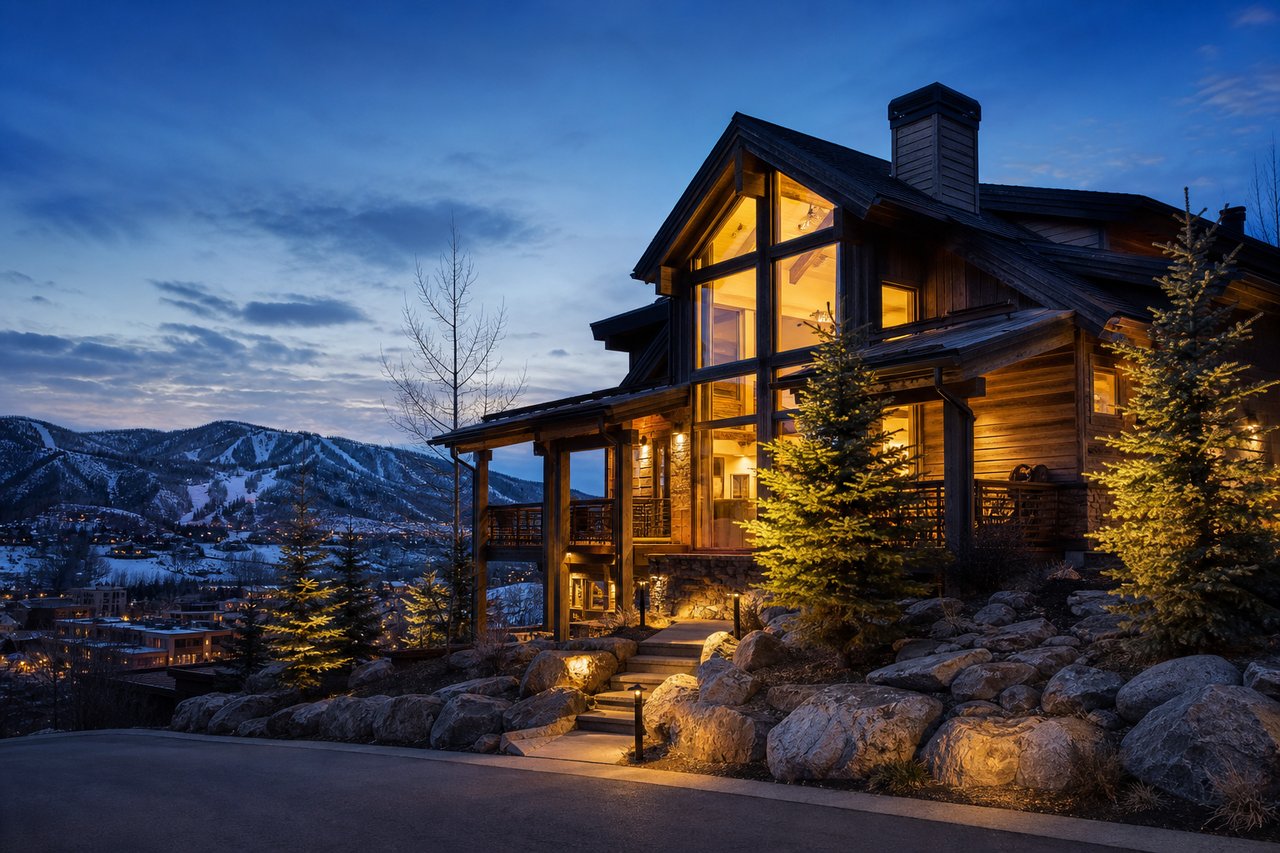
Vacation homes in Steamboat Springs can serve as personal retreats, income-generating short-term rentals, or both, but STR licensing is zone-specific, does not transfer at sale, and must be verified before you rely on any rental income projections.
Are vacation homes in Steamboat Springs a good investment or just a personal retreat?
Vacation homes in Steamboat Springs can be both a personal retreat and an income-producing asset, but the two goals require different due diligence. Short-term rental eligibility depends on which regulatory zone the property sits in, a new license must be obtained by every buyer, and occupancy limits cap the revenue potential of even the largest homes. Getting clarity on those facts before you make an offer is what separates a smart purchase from an expensive surprise.
Key Takeaways
- Recent portal reports show a wide range in Steamboat Springs median sale prices, Realtor.com reported $1.425 million and Redfin reported $979,000 for overlapping late-2026 periods, reflecting different datasets and property mixes.
- The city's short-term rental zones matter before anything else: Zone A is unrestricted, Zone B has subzone caps ranging from 5 to 20 licenses, and Zone C prohibits new STRs entirely.
- An STR license does not transfer when a property sells, every buyer must apply for a new one, so historical rental income is not a guarantee of future eligibility.
- Occupancy is capped at one person per 150 square feet of net floor area, with a hard maximum of 16 occupants, which limits how you can model revenue on larger homes.
- Every licensed STR must designate a local responsible party, making property management a real operational consideration for out-of-state owners.
What makes vacation homes in Steamboat Springs different from other mountain markets?
Steamboat Springs sits in a category of its own among Colorado resort towns. It has a genuine year-round economy, skiing and snowboarding in winter, mountain biking, fishing, and the famous Steamboat hot springs in summer, which means demand for short-term rentals doesn't crater in the off-season the way it does in single-season resort towns. That's a meaningful distinction when you're evaluating a property's income potential.
But the market is also more regulated than it was five years ago. The City of Steamboat Springs has built a formal short-term rental licensing framework, and operating without a license is unlawful. That's not a technicality, it's the first thing I walk every vacation-home buyer through before we start touring properties.
What does the Steamboat Springs market look like right now?
Two portal reports from late summer 2026 tell slightly different stories, which is worth acknowledging directly. Realtor.com reported a $1.425 million median sold price, 518 active listings, and 87 median days on market for September 2026, and characterized conditions as a buyer's market. Redfin reported a $979,000 median sale price for the three months ending August 2026, with 41 average days on market and 145 homes sold in August. The gap reflects different time windows, property mixes, and methodologies, neither is the definitive local MLS figure.
What both reports agree on is that inventory is elevated and properties are taking longer to sell than they did during the frenzy years. For a buyer, that's actually a favorable backdrop. You have more options, more time to do proper due diligence, and more negotiating room than you would have had in 2021 or 2022. For a seller, pricing accurately matters more than ever.
Data Point | Realtor.com (Sept 2026) | Redfin (3 months ending Aug 2026) |
|---|---|---|
Median Sale/Sold Price | $1,425,000 | $979,000 |
Days on Market | 87 (median) | 41 (average) |
Active Listings | 518 | Not reported |
Market Characterization | Buyer's market | Not reported |
Note: Both sources are aggregator portals, not the local MLS or REALTOR® association. Figures reflect different datasets and should be used as directional context only. I always pull verified MLS data for my clients before we make any pricing or offer decisions.
How does the STR licensing system work, and why does it change your due diligence?
This is the section most buyers skip, and it's the one that matters most if rental income is part of your plan.
The City of Steamboat Springs divides the city into three STR zones. Zone A places no cap on the number of licenses. Zone B is divided into six subzones with specific caps: B1 allows 5 licenses, B2 allows 20, B3 allows 18, B4 allows 17, B5 allows 12, and B6 allows 10. Zone C prohibits new STR licenses entirely. A property's address determines its zone, and a desirable location does not override a Zone C designation.
Here's the part that surprises almost every out-of-state buyer I work with: an STR license does not transfer when the property sells. The buyer must apply for a new license in their own name. If a capped Zone B subzone is already at its limit, a new application may not be approved. That means a property currently operating as a short-term rental is not automatically a property you can operate as one. This is a critical piece of due diligence, not a formality.
What are the operating requirements once you have a license?
Occupancy is limited to one person per 150 square feet of net floor area, with a minimum of two and a hard maximum of 16 occupants. A large home cannot be modeled as a high-capacity rental just because it has extra bedrooms. The city also requires each licensed property to designate a local responsible party, someone who can respond to issues on the ground, and to display contact, occupancy, vehicle, and parking information for guests. For an absentee owner based in Denver or out of state, that means building a local management structure into your ownership plan from day one. I've written a full breakdown of what that looks like in practice in my post on property management for Steamboat second homes.
None of this makes vacation-home ownership unworkable. It does mean the homework has to happen before you fall in love with a listing, not after you're under contract.
How should you think about the investment side versus the retreat side?
Most buyers I work with are somewhere on a spectrum. On one end is the pure investor: they want cash flow, they'll use the property sparingly, and every decision runs through a financial model. On the other end is the pure retreat buyer: they want a place that feels like theirs, they'll use it heavily, and rental income is a nice-to-have, not a requirement. Most people land somewhere in the middle, and that middle is where the decision gets genuinely interesting.
Here's how I frame it for my clients. The investment case for vacation homes in Steamboat Springs rests on a few pillars: year-round demand, a constrained supply of STR-eligible properties (thanks to the zone system), and long-term appreciation in a market where land and mountain access are finite. The retreat case rests on something harder to quantify: the value of having a place that's yours, that you can access on your schedule, and that your family will use for decades.
The mistake I see most often is buyers trying to optimize for both simultaneously without being honest about which one is actually driving the decision. If rental income is essential to making the numbers work, that property needs to be in Zone A or an open Zone B subzone, period. If personal use is the real priority, a Zone C property in a location you love might be exactly right, and you're not giving anything up by not being able to rent it.
For a deeper look at the pure investment angle, I'd recommend reading my post on whether a short-term rental in Steamboat makes sense in 2026. And if you're weighing a ski-in/ski-out condo against a detached home, the ski-in/ski-out condo guide walks through the tradeoffs specific to that property type.
The tax picture also matters, second homes and investment properties are treated differently by the IRS, and the way you use the property determines which rules apply. I always recommend buyers connect with a tax advisor who knows mountain-market real estate before closing. You can get oriented on the key concepts in my post on second-home tax considerations for Steamboat buyers.
Your specific numbers, what a property could realistically generate, what it will cost to carry, and what it might be worth in five or ten years, depend entirely on the property's zone, condition, location, and your intended use. That's the conversation I have with every buyer before we write an offer. If you're starting to think seriously about a Steamboat vacation home, that conversation is the right first step.
Frequently Asked Questions
Can I legally use a Steamboat Springs vacation home as a short-term rental?
Yes, but only if the property is in Zone A or an eligible Zone B subzone with available license capacity, and only after you obtain a license in your name from the City of Steamboat Springs. Zone C properties cannot receive new STR licenses. Check the property's zone through the city's STR rules and regulations page before making any assumptions about rental eligibility.
Does an STR license transfer when I buy a vacation home in Steamboat Springs?
No. According to the City of Steamboat Springs FAQ, a short-term rental license does not transfer with a property sale, the buyer must apply for a new license in their own name. In capped Zone B subzones, a new application may not be approved if the subzone is already at its limit, even if the previous owner held an active license.
How do I check whether a property is in Zone A, Zone B, or Zone C?
The City of Steamboat Springs publishes STR zone information through its short-term rental licensing page. Before relying on a property's rental history or any income projections in a listing, I verify the zone and current license availability directly with the city as part of my standard due diligence for vacation-home buyers.
Is it better to buy a ski-area condo or a detached home as a Steamboat Springs retreat?
It depends on how you plan to use it. Ski-area condos typically offer easier access to the mountain, lower maintenance responsibilities, and stronger short-term rental demand during ski season, but HOA fees and rental restrictions vary significantly by complex. Detached homes offer more space, privacy, and flexibility, but require more active management. The right answer depends on your usage patterns, budget, and whether rental income is a priority.
What occupancy and parking limits apply to a Steamboat Springs vacation rental?
The city limits occupancy to one person per 150 square feet of net floor area, with a minimum of two and a maximum of 16 occupants. Licensed properties must also meet parking requirements and display occupancy, vehicle, and contact information for guests. These limits apply regardless of how many bedrooms the home has, so large homes cannot be marketed for unlimited guest capacity.
The fall market in Steamboat Springs, with inventory elevated and days on market extended, gives serious buyers a window to do this kind of due diligence without the pressure of a multiple-offer environment. Whether you're buying purely for personal use or running the numbers as an investment, the right property is out there. The work is making sure you're buying the right one for the right reasons.
If you're ready to talk through what a vacation home in Steamboat Springs could look like for your situation, I'd love to help. Schedule a consultation here and we'll start with the numbers that actually matter for your goals.
Equal Housing Opportunity. Cole Helberg, Colorado License #FA.100079634, Real Broker. Member of NAR, CAR, and Altitude Association of Realtors. This article is general information only and does not constitute legal, tax, or financial advice, confirm your own numbers with your closing agent, tax advisor, or lender.